
Training in kilometres when the race is in miles
Convert your key session paces once, write both numbers side by side in the plan, and never convert again while running. Mental arithmetic at threshold effort is unreliable in exactly the way that makes runners go out too fast, and this is the problem Milemark was built for.
Who this actually happens to
More runners than you would think. American runners entering European marathons, where every course marker counts kilometres. British and Irish runners following American plans, where every session is written in miles while the parkrun down the road is measured in kilometres. Anyone whose watch, plan and race were set up by three different people.
The mixed case is worse than either pure one. When half your reference points are in one unit you stop trusting your instinct for either, and pace judgement is mostly instinct.
Do the conversions before the block starts
Do the conversions at a desk, before the block starts. Take the handful of paces a plan actually specifies, usually easy, marathon, threshold and interval, convert each one, and write both numbers into the plan itself.
Four numbers is the whole job. Converting mid-session means doing it eight times a week under fatigue, and the one time you get it wrong is the session that matters.
Your four paces, both ways
An example block built around a 4:00 marathon target, showing what each session looks like in either unit.
| Session | Pace per km | Pace per mile |
|---|---|---|
| Easy | 6:56 /km | 11:10 /mi |
| Marathon | 5:41 /km | 9:09 /mi |
| Threshold | 5:16 /km | 8:29 /mi |
| Interval | 4:35 /km | 7:23 /mi |
Race day is a third problem
Course markers are in the race's unit, and your watch auto-laps in yours. A watch beeping at every kilometre next to signs counting miles gives you two unsynchronised streams of information at the exact moment you are least equipped to reconcile them.
Set the watch to the race's unit for race day. Your target pace in the other unit is a number you should already know without doing anything to it.
Keeping the number in front of you
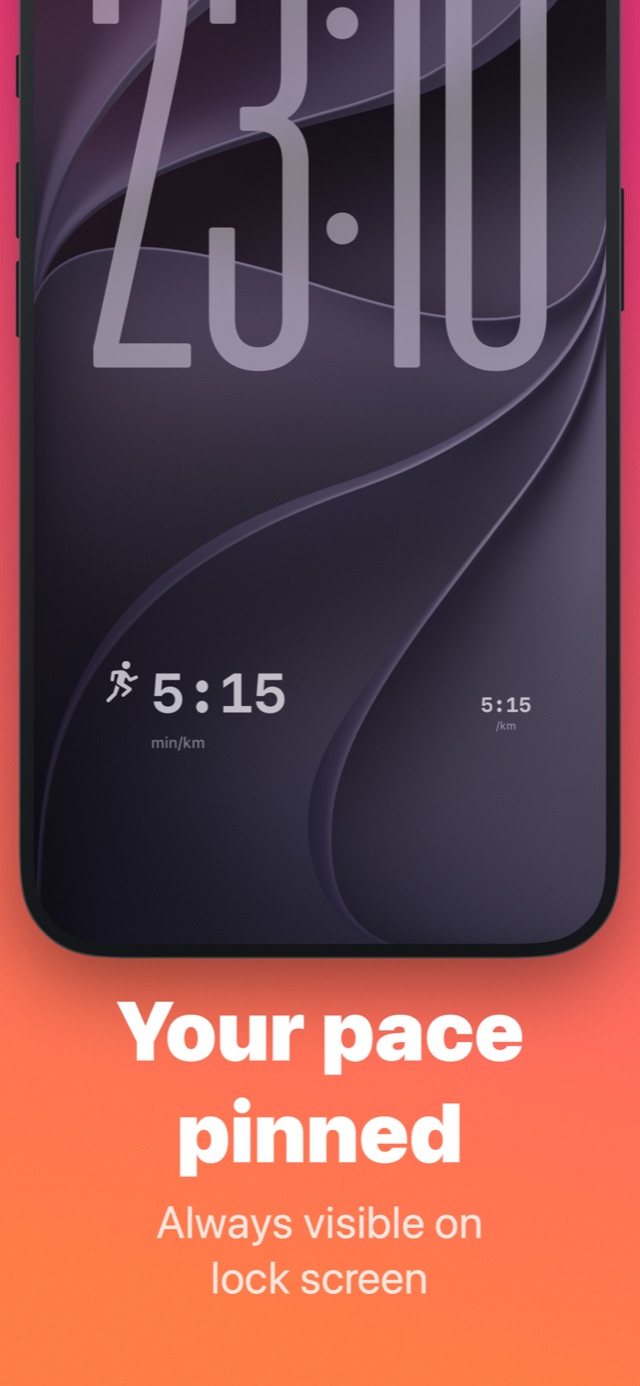
Milemark's paid unlock pins a saved pace to the Lock Screen, which solves the last version of this problem: remembering the converted number when it counts. Set it the night before and it is on the phone in your pocket at the start line.
Questions about this
Should I switch my watch to the race's unit?
For race day, yes. Matching your auto-lap to the course markers removes the reconciliation entirely.
How many paces do I actually need to convert?
Usually four: easy, marathon, threshold and interval. Everything else in a plan is a variation on those.